
The Most Successful Career Transition
Do you feel trapped and unfulfilled in your present position?
It could be burnout or just the fact you wish to do something more with your life.
Are you longing for a job that combines your abilities with your passions and gives you a feeling of purpose? If so, it might be time to think about a career shift. It can be intimidating and exciting to go through a career transition, but it becomes easier with the right plan of action and a can-do attitude.
In this article, we will walk you through the stages required for career transition assistance in this blog, giving you the power to decide your professional future and open up a world of opportunities. In a pre-pandemic in 2018, 51% of workers were already planning to change jobs as per a report by Statista.
Whether you’re making a job shift because you’ve outgrown your present position, have found a new interest, or just want a fresh start, it takes serious thought, strategic preparation, and the bravery to push yourself outside your comfort zone.
A carefully planned move can result in renewed work-life balance, professional development, and personal satisfaction. In this career transition guide, we will lead you through step-by-step guidance of the career change process in this blog.
 1. Reflection and Self-Evaluation
“Alone we can do so little; together we can do so much.” – Helen Keller.
Before making any big decision, map out your “why?”
Initiate the process of transitioning by delving deeply into your self-discovery. Think about your passions, values, talents, and interests. What energizes you? What future looks like for you?
It’s wise to seek counsel from your trusted friends and coworkers in the industry. Consider how you may use your strengths in a new career after identifying them. What are your long-term objectives? What goals do I have for my next career?
The actions that come after this self-evaluation will have a strong basis thanks to it, as compared to a half-baked plan. In a post covid workspace, it has become much more flexible to accommodate your career needs by aligning yourself with upcoming industry trends.
 2. Seeking New Perspectives
Expanding on our first point, it’s time to identify different employment options. Now that you are clear on your objectives and aspirations, look into different professions and industries suiting your interests. In the industries of the future, look for potential for expansion and future stability. Are there any credentials and certifications needed? Transitioning into tech and into outplacement has been the latest industry trend given the demand for Artificial Intelligence Jobs.
Make connections with people who are already employed in your desired fields and ask questions to obtain a thorough understanding of those professions. Set up informal conversations and learn insightful details about their experiences, obstacles, and abilities necessary for success in your desired field.
Attend conferences, seminars, or events tailored to your sector and immerse yourself in the most recent trends and advancements. Your assessment will serve as a backbone for your long-term career journey.
 3. Bridge the Knowledge and Skill Gap
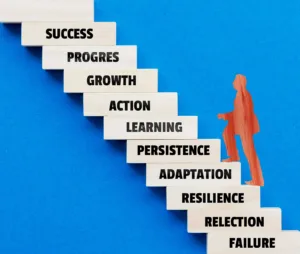
One of the most important steps in your job transition is locating the gaps between your current skill set and the needs of your target career. It’s crucial, to be honest about the abilities you already have and the ones you still need to learn.
Look for skill upgrades, training programs, workshops, and online courses, that provide possibilities for skill development. OTU provides free skill development courses in 50+ job categories.
Consider pursuing degrees or certifications that are highly appreciated in your desired field. These qualifications might help you stand out from prospective candidates and show that you’re dedicated to developing professionally.
Additionally, look for opportunities to put what you have just learned to use in the real world, such as volunteer work or internships. Always look for opportunities to learn new things and advance the abilities that will help you succeed in the field of your choice.
Related read: Why Upskilling And Reskilling Is Important For Career In 2023
 4. Creating a Strong Network
As the saying goes, “Your network is your net worth” and this is true when changing careers. Through networking events, seminars, or online platforms, make contact with professionals in your preferred industry.
Having a supportive community not only gives you emotional encouragement but also widens your network and opens doors to prospective opportunities. Your network will help you make lasting decisions based on informed conversations.
Remember that you are not alone, and finding others who share your beliefs can inspire and motivate you to keep going.
 5. Acquiring Real-World Experience
During a career shift, collecting practical experience is just as crucial as accumulating theoretical knowledge. Seek ways to become fully immersed in your chosen field. Take up freelance projects, part-time jobs, internships, or volunteer opportunities to develop your network and portfolio.
Consider contacting businesses or individuals who share your professional objectives and expressing your interest in working on their initiatives. Through practical execution, you’ll be able to learn relevant skills for your business and gain insightful knowledge about what it’s like to work in your selected field every day.
Don’t undervalue the importance of taking on new tasks or projects at your current employment that is related to your intended profession, either. Display your capacity for change and dedication to development as that will be a pivotal selling point for you.
 6. Goal-setting and Taking Action
It is essential for the success of your job move that you set reasonable goals and deadlines. Set deadlines for achieving particular tasks or goals and divide your path into more manageable, smaller chunks. To make sure you stay on course, regularly assess your goals and make any necessary modifications.
It’s now time to act on the established plan. To find prospects in your new field, update your resume, apply for positions, and use your network and internet job boards. You can visit Glassdoor or Payscale to review the company, job role, and salary you can expect in that role.
Prepare for interview questions by pointing out your transferable skills and experiences as you get ready for the interview. Let’s say you’re contemplating a mid-career transition to teaching, you’d have to evaluate your experience so far and see which skills are similar. If you worked as a cook previously, you have to compare what skills you can take into a teaching career.
Be open to opportunities or positions at the entry-level that can help you progress towards your long-term career ambitions. Keep in mind that every step you take, no matter how tiny, will get you closer to your goal.
We hope this guide was helpful and wish you all the best in your career change journey!
Check out OTU’s job section and choose from over 10000+ jobs in India!


Leave a reply